
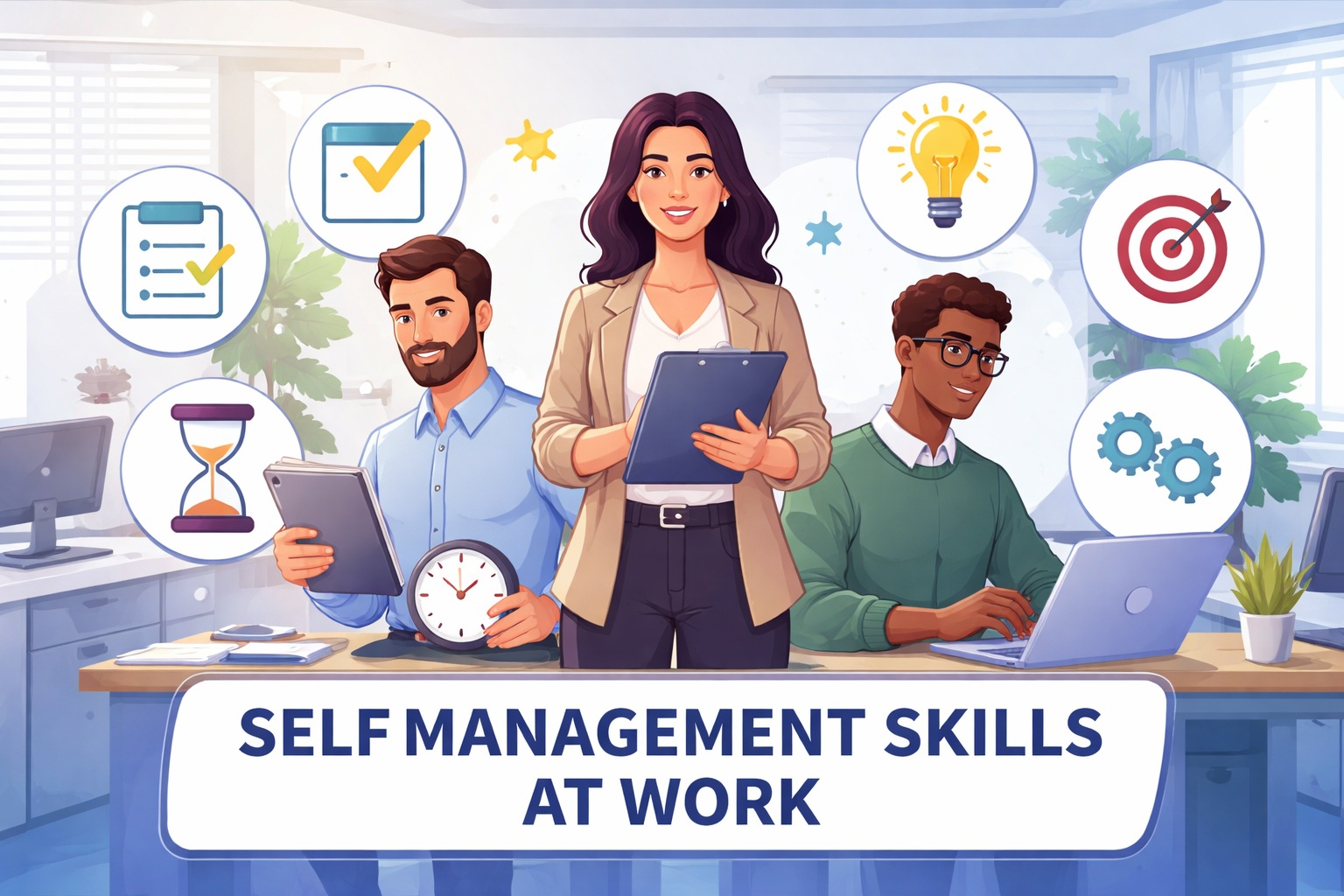
Success in today’s competitive work environment depends not just on what you know, but how well you manage yourself. Strong self management skills at work help professionals stay productive, meet deadlines, and maintain a positive attitude even in challenging situations.
Whether you are a student, employee, or manager, developing effective workplace self management skills can significantly improve your performance and career growth. This guide explores key skills, real-life self management skills examples, and actionable strategies to strengthen your abilities.
Understanding Self Management in the Workplace
Self management in the workplace refers to the ability to control your actions, emotions, and time without constant supervision. It involves setting goals, staying disciplined, and being accountable for your performance.
Employees who master self management can:
- Work independently
- Handle pressure effectively
- Maintain professionalism
- Adapt to change quickly
Importance of Self Management Skills
The importance of self management skills cannot be overstated in modern workplaces. Here’s why they matter:
Boosts Efficiency
When you organize your tasks and manage your time well, you get more done in less time.
Enhances Decision-Making
Good self management helps you think clearly and make better choices.
Builds Professional Reputation
Being reliable and disciplined earns trust from employers and colleagues.
Improves Work-Life Balance
Managing your schedule effectively ensures time for both work and personal life.
Encourages Personal Growth
Continuous self-improvement leads to long-term career success.
Essential Workplace Self Management Skills
To excel professionally, you must develop these key workplace self management skills:
1. Time Management
Efficient use of time is critical. Prioritize tasks and avoid procrastination.
Tip: Use planners or digital tools to track deadlines.
2. Self-Discipline
Self-discipline keeps you focused even when distractions arise.
Example: Completing tasks on time without external pressure.
3. Stress Control
Managing stress helps maintain productivity and mental clarity.
Tip: Practice deep breathing or short breaks during busy hours.
4. Goal Setting
Setting clear goals gives direction and purpose.
Example: Weekly targets to track progress.
5. Accountability
Take responsibility for your work and outcomes.
Example: Owning mistakes and learning from them.
6. Adaptability
Being flexible helps you adjust to workplace changes.
Example: Learning new tools or processes quickly.
7. Emotional Intelligence
Understanding and controlling emotions improves workplace relationships.
8. Organization
Keeping your workspace and tasks organized increases efficiency.
Practical Self Management Skills Examples
Here are some real-world self management skills examples you can apply:
- Creating a daily schedule
- Meeting deadlines consistently
- Staying calm under pressure
- Preparing for meetings in advance
- Avoiding multitasking and focusing on one task
- Taking initiative without being told
- Reviewing your performance regularly
These habits reflect strong self management in the workplace and contribute to overall success.
Strategies to Improve Self Management Skills at Work
Improving your self management skills at work takes consistent effort. Follow these strategies:
Plan Ahead
Start your day with clear priorities and a structured schedule.
Set SMART Goals
Make goals specific, measurable, achievable, relevant, and time-bound.
Eliminate Distractions
Reduce interruptions like social media or unnecessary meetings.
Build Healthy Habits
Regular exercise, sleep, and nutrition improve focus and energy.
Track Your Progress
Evaluate your performance weekly to identify improvements.
Stay Motivated
Reward yourself after completing important tasks.
Benefits of Strong Self Management Skills
Mastering workplace self management skills offers numerous benefits:
- Increased productivity
- Better time utilization
- Stronger professional relationships
- Improved confidence
- Reduced stress levels
- Faster career growth
Common Mistakes to Avoid
While developing self management skills, avoid these pitfalls:
- Procrastination
- Poor planning
- Ignoring deadlines
- Lack of focus
- Avoiding responsibility
Recognizing these mistakes is the first step toward improvement.
Why Employers Value Self Management
Employers prioritize candidates with strong self management skills at work because they:
- Require less supervision
- Deliver consistent results
- Adapt quickly to change
- Contribute positively to team dynamics
These qualities make employees more dependable and valuable to organizations.
Conclusion
Developing effective self management skills at work is essential for achieving both personal and professional success. From time management to emotional control, these skills empower you to stay organized, productive, and confident in any work environment.
By understanding the importance of self management skills and applying practical strategies, you can enhance your performance and stand out in your career. Start building these skills today and take control of your professional future.